
Choose a 10 yard for one room or heavy debris like dirt, brick or shingles; a 15 yard for a kitchen, a roof, or a garage or basement cleanout; and a 20 yard for a whole-house cleanout, a move or a large renovation. If you're torn between two sizes, the bigger one is usually cheaper than a second haul, unless the load is heavy.
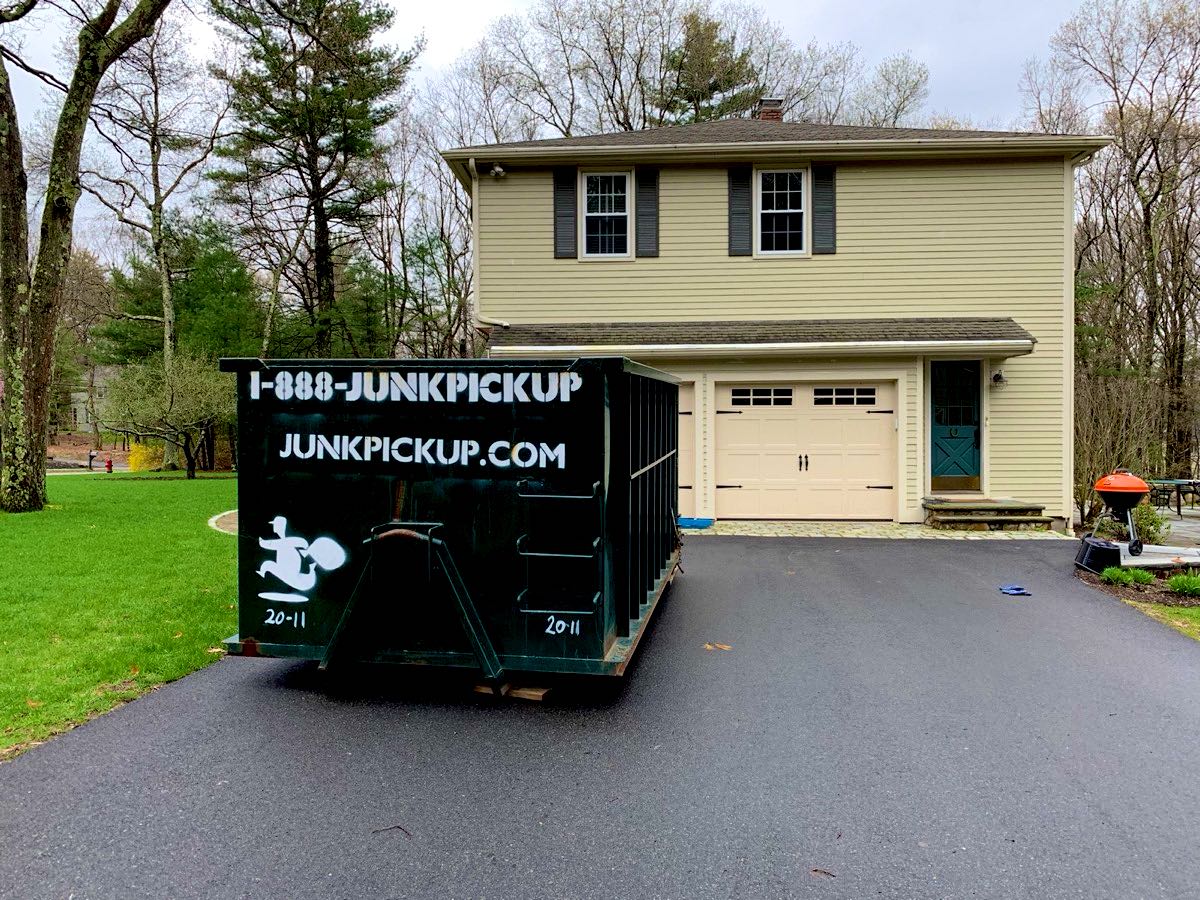
The quick version
| Project | Size |
|---|---|
| Bathroom remodel | 10 yard |
| Dirt, brick, concrete or tile | 10 yard |
| Kitchen remodel | 15 yard |
| Roof tear-off, one layer | 10 or 15 yard (by weight) |
| Garage, attic or basement cleanout | 15 yard |
| Deck removal | 15 yard |
| Whole-house or estate cleanout | 20 yard |
| Moving or downsizing | 20 yard |
| Several rooms of flooring and drywall | 20 yard |
Think in pickup truck loads
A cubic yard is hard to picture. A pickup truck bed is easier. A 10 yard holds about 4–6 truck loads, a 15 yard about 7–9, and a 20 yard about 10–12. Walk through the job and count how many truck loads you'd haul to the dump.
Weight changes the answer
Every size has a weight allowance: 1.5 tons for the 10 yard, 2 tons for the 15 and 3 tons for the 20. Light, bulky things like furniture and household junk fill space first. Heavy material like shingles, plaster, tile, dirt and concrete reaches the weight limit long before the dumpster looks full. That's why a heavy load usually belongs in a small dumpster.
When in doubt, size up (unless it's heavy)
If you're between the 15 and the 20 for a cleanout, the 20 costs $100 more and avoids paying for a second dumpster. For a roof or a masonry job, the opposite is true: stay small, because extra space won't help when weight is the limit.